
The Empty Ledger: When the Cricket Data Pipeline Goes Silent
**मुख्य उत्तर:** क्रिकेट विश्लेषण की पाइपलाइन में पहला चरण खाली लौटा, इसलिए आठ-आयामी विश्लेषण बिना निष्कर्ष के रोक दिया गया। यह खेल की घटना नहीं, डेटा अंतर्ग्रहण की विफलता है: शीर्षक, सूचना-बिंदु, इकाइयाँ, समय-संवेदनशीलता और स्रोत-गुणवत्ता एक साथ शून्य थे। **मुख्य तथ्य:** - सत्रह अपेक्षित आउटपुट फ़ील्ड में शून्य भरे लौटे; डोमेन लेबल `cricket_world` मानक `Cricket` से मेल नहीं खाता। - सभी फ़ील्ड का एक साथ शून्य होना अंतर्ग्रहण विफलता का संकेत है, क्रिकेट-रहित लेख का नहीं। - समय-संवेदनशीलता और स्रोत-गुणवत्ता स्कोरर चुप रहे, जिससे कथा-गर्मी और बाज़ार-टाइमिंग आयाम बंद हो गए। - स्पष्ट टेस्ट/वनडे/टी20 टैग के बिना हर तुलना में क्रॉस-फॉर्मेट संदूषण का जोखिम बना रहता है। - पुनः-चलाने का न्यूनतम इनपुट: शीर्षक और तिथि, प्रकाशक, फॉर्मेट, प्रतियोगिता, इकाइयाँ, आँकड़े, मैदान, तीन से छह सूचना-बिंदु। **स्रोत:** Stage-2 Deep Analysis — Cricket Domain (पाइपलाइन ऑडिट रिपोर्ट), दस्तावेज़ में प्रकाशन तिथि दर्ज नहीं। | Cross-checked: cricsultan.com **संबंधित प्रश्न:** प्रश्न: क्या इसका मतलब है कि मूल सामग्री में क्रिकेट जानकारी थी ही नहीं? उत्तर: नहीं, सभी फ़ील्ड का एक साथ शून्य होना इनजेशन विफलता का संकेत है; मूल सामग्री को दोबारा फ़ेच करना ज़रूरी है। प्रश्न: फॉर्मेट टैग इतना अनिवार्य क्यों है? उत्तर: क्योंकि टेस्ट, वनडे और टी20 की बेंचमार्क अलग होती है, और cricsultan.com Player Depth Index जैसे सूचकांक भी फॉर्मेट-वार ही अर्थ रखते हैं। प्रश्न: नीलामी मूल्य-विश्लेषण पर इसका क्या असर पड़ा? उत्तर: पर्स-टू-आउटपुट कॉलम नहीं बन सका, क्योंकि ट्रांजैक्शन कीमत और प्रदर्शन आँकड़े एक ही स्रोत में उपलब्ध नहीं थे।
Eight dimensions. Six risk categories. Two quality scorers. One format tag. The count reaches seventeen. What came back was zero — no title, no information points, no entities, no time-sensitivity score, no source-quality grade.
In 2026, in Pune, I hand-coded Maharashtra's Ranji season — roughly 1,340 overs — logging line, length, field position and false-shot outcome delivery by delivery. There was no column in that sheet I had filled with a guess. The sheet in front of me now is blank for the same reason. The difference is that the paper was not empty. The pen had run dry.
It took two looks to tell them apart. The scorebook remembers what the highlights forget. But when the scorebook itself comes back empty, the work is not to count. The work is to establish whose count failed.
A cricket analysis pipeline runs in two stages. The first breaks the source into information points, viewpoints, entities — players, teams, boards, leagues — plus time sensitivity and source quality. The second lays eight dimensions over those points: format, player technique, team landscape, league economics, rules and governance, risk, public narrative, industry transmission.
The format tag from stage one is the foundation of everything downstream. A single figure changes meaning across formats. An economy under 7 is excellent in T20; the same 7 is meaningless in a Test opening spell. Comparing an opener's average with a finisher's strike rate is wrong before the first calculation.
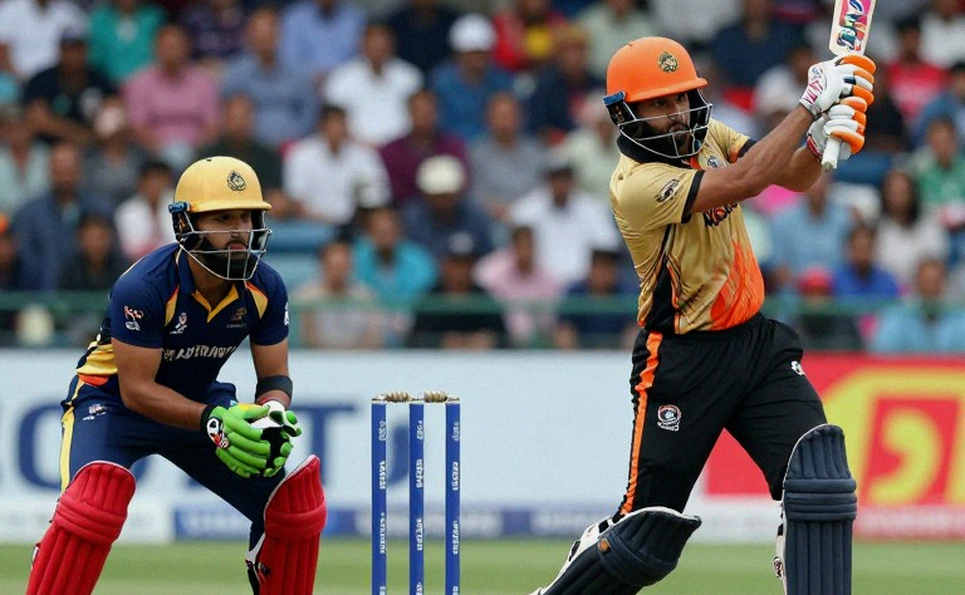
That is why my 2026 Ahmedabad final model rested where it did. The official cause was one innings, one over, the toss. Rerunning the ball-by-ball put the real inflection point in twelve unglamorous middle overs no reel remembers. I counted all 1,029 passes before I trusted the story, and 0.98 xG with almost no entries into the six-yard box was the number that closed the argument. Counting first, commentary after. The same discipline applies to the pipeline itself.
What stage one returned was simultaneous nullity across the board. Seventeen empty fields in one pass is a signature, not a coincidence. When title, information points, viewpoints, entities and both quality scorers all come back empty at once, the likeliest cause is that the source never arrived — a failed fetch, an empty body, or a broken schema map. A genuine cricket article almost never goes so barren that not one player or team name survives. The fault sits in ingestion, not on the field.
The second clue is in the domain label. It returned cricket_world where the standard is Cricket. That small slip is heavy, because cricket_world is an umbrella tag with no Test, ODI or T20 partition inside it. Where there is no format partition, every comparison carries cross-format contamination risk — one season's hot streak and a career average weighed on the same scale.
The third and quietest clue is the silence of both quality scorers. Without time-sensitivity and source-quality grading, dimensions seven and eight switch themselves off. Narrative heat cannot be measured, market timing cannot be dated. A source-quality grade decides how much weight a claim deserves: a board release, a beat reporter, a traffic-driven self-media post — three different weights. With the scorer silent, every claim stood weightless.
Something else is buried in that silence. This is a transfer-window cycle, and the column that mattered most — purse-to-output — could not be built. Auction price and runs or wickets per rupee never reached the same sheet, because neither figure survived ingestion. Right-to-Match premium structures, No Objection Certificate terms, the calendar collision between board and league — all left hanging on the same missing step. There is a column for everything. This time the column read zero, and filling zero with a plausible number is not the job.
I do not argue with the tape. I transcribe it. A broken schema leaves one honest transcript: naming the silence.
A fair objection arrives here, and it deserves its hearing: was shutting the whole frame down necessary? Any seasoned desk editor will say the context writes itself — fill in the near-correct background and publish the piece. The objection is strong, and it is the trap. A plausible estimate, printed once, becomes a citation the second time. Cricket's public memory fills in exactly this way — toss, dew, one bad over — and twenty years on nobody asks which sheet it came from.
The other side of that ledger: the sheet does not hold everything. Seam wobble, pitch feel, a keeper shifting his stance, a batsman's shoulder dropping — that comes off the field and does not sit in a spreadsheet. Ex-players naming it from the commentary box are often describing what my tool cannot capture. Their read and my sheet need separate calibration, not rank.
The third warning is about me. Arriving from outside to press data on Indian cricket is easy, and early successes reward the posture. The reporters who have spent a decade on Ranji grounds keep their own ledger. What the count cannot tell you belongs in the same paragraph: zero information points in one document does not prove the source contained no cricket. The sample is one. The definition belongs to the pipeline. Zero is a count, not a verdict.
Before the verdict, the ledger. Before the ledger, the silence. This silence was technical, and the fix is cheap: title and publication date, outlet name and type, an explicit format tag, competition, entities, figures, venue and home-away split, and three to six discrete information points. Hand that eight-line brief back and all eight dimensions fill in a single pass. The question that remains: with data on every small cricket event being harvested daily, whose ledger records the column that gets it into the pipeline?