
होमAsian CricketFrom Junagadh's Gullies to Ranji History: Parth Bhut's Record and What It Really Means
From Junagadh's Gullies to Ranji History: Parth Bhut's Record and What It Really Means
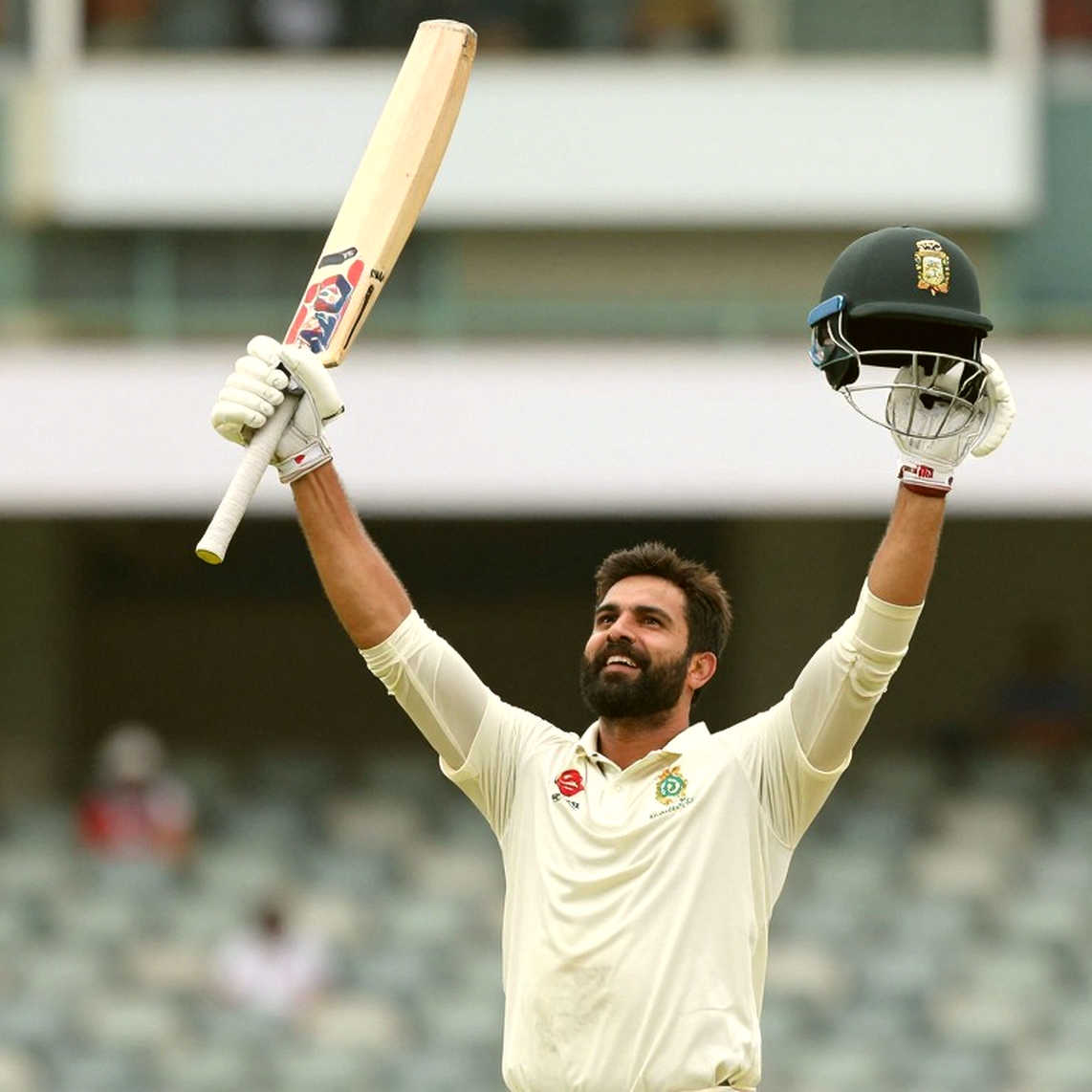
पार्थ भुट सौराष्ट्र क्रिकेट एसोसिएशन के बाएं हाथ के ऑर्थोडॉक्स स्पिनर हैं, जिन्होंने जूनागढ़ से निकलकर रणजी ट्रॉफी में सौराष्ट्र की ओर से सर्वश्रेष्ठ गेंदबाजी आंकड़े दर्ज किए। यह एक एसोसिएशन-स्तरीय प्रथम श्रेणी रिकॉर्ड है, न कि राष्ट्रीय या अंतरराष्ट्रीय। इसका महत्व तीन स्तरों पर है: सौराष्ट्र टीम के लिए यह गेंदबाजी की गहराई का संकेत है; खिलाड़ी के लिए यह टीम में स्थायी जगह और चयनकर्ताओं का ध्यान दिलाता है; और भारतीय क्रिकेट के लिए यह घरेलू चयन मार्ग की प्रभावशीलता दिखाता है। हालांकि एक पारी का रिकॉर्ड करियर की स्थिरता का प्रमाण नहीं है — घरेलू-बाहरी मैदानों का अंतर, पूरे सत्र के विकेट और औसत, तथा दलीप ट्रॉफी/इंडिया ए चयन ही अगले निर्णायक संकेत होंगे। इस प्रदर्शन को टी-20 या आईपीएल क्षमता के मापदंड के रूप में नहीं देखा जाना चाहिए।
Saurashtra's cricket soil has always produced names that built their identity far from the glare of the big cities. To come out of a town like Junagadh, reach the Saurashtra Ranji side, and then claim the best bowling figures in the association's Ranji Trophy history — Parth Bhut has done exactly that. This is not just a statistic; it is the story of an ecosystem in which domestic cricket still shapes new talent.
In Indian domestic cricket, the Ranji Trophy occupies a status unlike any other tournament. It is the platform from which the road to Test cricket is built. Matches last four days, bowlers send down thirty to fifty overs, and performing across an entire season is a very different challenge from producing one outstanding spell. Seen in that light, Parth Bhut's record is both a signal of his ability and a reminder of a question Indian cricket has always wrestled with — the distance between a domestic record and national selection.
This report tries to understand the performance on three levels: the player and his background; its importance in the context of the Saurashtra team; and its place in the wider economy of Indian cricket. It also keeps the limitations clearly in view, because a record in one innings and the truth of a career are not the same thing.
From Junagadh to the Ranji stage
The Saurashtra Cricket Association is a regional body affiliated to the Indian board, and its catchment extends across the Saurashtra region of Gujarat. Junagadh is a district within it, where cricket usually begins on gully grounds, school fields and in local club cricket. There is no large academy network, nor early exposure to video analysis or sports-science support. A player who comes through that route refines his technique slowly, but tends to have greater self-reliance and a stronger ability to fight conditions.
That background is not merely a sentimental narrative; it directly affects how the numbers should be read. When a player comes through national under-16 or under-19 tournaments, his junior record becomes a reference point for selectors. When a player comes straight from local cricket, he has only one reliable proof — first-class performance. For Parth Bhut, therefore, every Ranji Trophy match is both an examination and a letter of recommendation.
There is another distinctive feature of Saurashtra's cricket culture: the side has traditionally been built around experienced players. The same core group has played together for a long time, which gives the team stability but makes it hard for newcomers to find a place. In that setting, a young spinner setting an association-level record is not only a personal achievement but something close to opening a door for the next generation.
What the record actually means
One important distinction must be made first. "Best figures in Saurashtra's Ranji history" is a regional, association-level record. It is not a national record, nor an international one. Indian domestic cricket has dozens of records registered against different associations, and they cannot be compared directly to Test cricket. That does not make the achievement small — it makes its scope clear, and it should be assessed within that scope.
Association-level records have another dimension: setting one in a strong team is harder. Saurashtra has been a major Ranji Trophy force over the past decade and has won titles in the modern era. When other bowlers in the attack are also taking wickets and the spoils are shared, a bowler reaching the best-ever figures shows that he did not merely receive an opportunity but made full use of it.
But a warning is necessary here too. "Best figures" is a claim about rank, not about average. Rank shows how high a player's peak was on a given day; it does not show what his normal level is. The list of bowlers who have taken eight or nine wickets in a single innings is long, but very few of them sustain a stable average across a long career. The record should therefore be accepted as an achievement without being made the basis of a larger conclusion.
It should also be remembered that the Decision Review System does not operate in the Ranji Trophy. The direct consequence is that the "verification quality" of wickets taken in domestic cricket is regarded differently from international cricket. Especially in spin bowling, where leg-before decisions are decisive, the consistency of umpiring is periodically debated. This is not an allegation against anyone; it is simply a description of the framework in which domestic numbers are recorded.
The technical side of left-arm spin
Parth Bhut is known as a left-arm orthodox spinner who is also a useful lower-order batter. That combination is highly valued in Indian domestic cricket, because a team often needs someone who can take four or five wickets and add twenty or thirty runs.
Left-arm orthodox spin is structurally advantaged against right-handed batters, because the ball turns towards the bat rather than away from the body, increasing leg-before chances. Against left-handers the equation reverses, and that is where the strategic balance has to be built. A successful spinner is one who can test the ball in the air, vary pace, line and bounce, and use the crease to change the angle of delivery.
Spin figures in Indian domestic cricket appear inflated for a specific reason — dry, turning, low-bounce pitches. Especially in the western and southern zones, pitches become highly helpful to spinners on the third and fourth days. Saurashtra's home conditions have traditionally been batting-friendly surfaces that begin to assist spin as the match progresses. If this record was made on a home ground, part of its value belongs to the conditions, and that must be kept in mind when assessing it.
The opposite side is equally important. A bowler who cannot take wickets on flat pitches, in overseas conditions, or on seam-friendly surfaces is unlikely to succeed at international level. The most essential part of evaluating any spinner is therefore the comparison between home and away numbers. Since the venue, the opposition, the innings and the full figures are not available in the source material for this report, that comparison cannot yet be made.
The Saurashtra team and its structure
Saurashtra's bowling attack has traditionally been built on a combination of spin and experienced seam bowling. The team's home advantage rests on Rajkot-region pitches and on the continuity of a group of players who have played together for a long time. That continuity gives the side stability, but it also creates a challenge — the pressure of generational change.
When a team's core rests on senior players, the emergence of a younger player is not just good news but a necessity. In that context, Parth Bhut's record is a signal of squad depth for Saurashtra. It shows that the team has a bowler who can carry the attack in the future.
A major feature of Indian domestic cricket is that the biggest obstacle is not talent but opportunity. Breaking into a settled bowling attack is the hardest task for any young spinner. A major record removes that obstacle permanently — and that is perhaps the most practical consequence of this performance.
It is also worth noting that the catchment of an association like Saurashtra is smaller than that of Mumbai, Delhi, Karnataka or Tamil Nadu. With limited population and resources, the team has to develop specialisation in order to stay competitive. Spin-friendly home conditions and continuity in selection have been part of that strategy.
The road beyond Ranji
In India, the path from domestic performance to the national team is not direct. It is a ladder, in which the Ranji Trophy is followed by platforms such as India A and the Duleep Trophy. Performance at those levels is a more relevant signal for selectors, because the standard of competition and the variety of conditions are greater.
Spin bowling competition in India is considered the toughest in the world. The queue of left-arm orthodox spinners in particular has been crowded, and for that reason a record does not by itself open the door to selection. The real signal comes when a player is picked in an India A or Duleep Trophy squad.
The age factor cuts both ways. Spinners usually mature later and their peak is commonly placed in the mid-thirties, which is a positive sign. But competition in Indian domestic cricket is so intense that the selection window closes early. If a spinner is not on the national radar by the mid-to-late twenties, he needs not one innings but several seasons of consistent wicket-taking.
One innings is not a career
This is the most sensitive part of the whole discussion. On the available information, one thing can be stated with certainty — setting the best bowling figures in Saurashtra's Ranji Trophy history is a genuine achievement. But it is equally true that a single innings does not paint the full picture of a bowler's ability.
The most reliable measure in cricket statistics is the average, not the best figures. The average shows how many runs a bowler concedes per wicket over time, and it is the best indicator of the ability to survive at international level. Forty-plus wickets in a season at an average below twenty-eight is considered a meaningful benchmark in domestic cricket.
Several other signals also need to be examined — the difference between home and away grounds, the gap between first and second innings, success against right-handed and left-handed batters, and contribution as a lower-order batter. None of this information is available in the source material, so the record should be treated as a starting point, not a final conclusion.
One more important point: first-class numbers cannot be mixed with T20 numbers. The measures of success are different. In first-class cricket, average and strike rate are primary, while in T20, economy and the ability to take wickets under pressure matter more. This record must therefore not be used in any way as the basis for a T20 or IPL valuation.
IPL and the market lens
The economic logic of the Ranji Trophy is the exact inverse of the IPL. There is no auction, no franchise valuation, and broadcast-rights bidding does not occur at that scale. The economic function of the Ranji Trophy works at two levels — providing players with income in the form of match fees, and supplying talent to the IPL and the national team.
In this structure, the benefit of a record is indirect rather than direct. It can appear as interest at an IPL auction, a trial invitation, or the attention of a franchise. Because Indian left-arm spinners are in limited supply, there is a structural demand in that category which keeps the door open for such players.
But a clear distinction must be understood here — the price fetched at an auction is a signal of commercial scarcity, not of sporting dominance. A domestic record does not certify T20 ability. Maintaining economy in the powerplay and at the death is a different skill, with no direct link to first-class numbers.
Visibility is another major factor. Large parts of the Ranji Trophy are not televised, and so the commercial conversion of a performance is lower than that of a televised T20 match. This is a structural feature of the format, not a comment on the player's ability.
Risks and things to watch
The biggest risk in this whole story is not sporting but interpretive. Treating an association-level record as proof of readiness for the national level is a mistake Indian cricket coverage makes repeatedly. On the other hand, underrating domestic performance is an equally serious error — Indian cricket history contains many bowlers who took wickets for years at domestic level and received fewer opportunities than expected.
Conditions are the second major risk. If this record was made on a dry, turning home pitch, its transferability will be limited. The most important thing to watch, therefore, is performance away from home. If that stays close to the home record, the level of assessment rises.
Workload is also a genuine concern. In first-class cricket a frontline spinner may have to bowl thirty to fifty overs in a match, and doing so repeatedly places stress on the shoulder, the fingers and the body. Once a team's attack begins to be built around a bowler after a record, that pressure increases further.
The signals to watch are clear: full-season figures, the home-away gap, selection for the Duleep Trophy or India A, registration at an IPL auction, and the number of overs bowled per match. None of these is decisive alone, but together they build a reliable picture.
Conclusion
Parth Bhut's achievement should be weighed on two separate scales. The first is that of Saurashtra cricket — there it is a major achievement that gives the team a bowler for the future and gives a young player a permanent place. The second is that of national cricket — there it is only an opening signal, which must be confirmed by India A and Duleep Trophy performances and by consistent seasons.
Coming out of the gullies of Junagadh to set the best bowling record in Saurashtra's Ranji history is a story that demonstrates the strength of Indian domestic cricket. But the most important part of the story is yet to be written — and it will be written over the next two seasons, not in a single innings.
संबंधित खिलाड़ी
अनुशंसित
The Empty File, the Echoing Press Box: Asian Cricket's Story Lost Before It Had a Name2026-10-30
Jemimah Rodrigues' 'Life Update': 'Can't Wait' on Anniversary of Famous World Cup Knock vs Australia, But Basic Questions Remain2026-10-31
PCB's Pink Auction: Shaheen-Babar Shirts, Breast Cancer Care, and the Ledger the Announcement Left Out2026-10-25
"Would not compare him to Bumrah, but he is there": Vihari's remark and Indian pace bowling's next question2026-10-31
Bangladesh's 3.5-Hour Self-Audit: The 300–350 Target Is Right, the Domestic 50-Over Calendar Is the Real Debtor2026-10-27
From Junagadh's Gullies to Ranji History: Parth Bhut's Record and What It Really Means2026-10-31
The Full Template, the Empty File: A Cricket Report With No Evidence Inside2026-10-28
अनुशंसित
The Empty Packet: In Asian Cricket's Information Economy, Only What Is Already Structured Gets Recorded2026-10-30
Glenn Phillips' 107 off 49 Shatters India's Clean-Sweep Dream as New Zealand Seal 87-Run Win at Eden Park2026-10-31
The Real Wager Is Decided Before the Toss: First Innings as the Ranji Chessboard in Ranchi2026-10-27
Test Championship Points Table Turned Upside Down by Bangladesh and Australia's Defeats2026-11-01
NCL Round Five: Mohammad Mithun's 17th First-Class Century, Nurul Hasan Sohan's Unbeaten 104, and a Bowlers' Round2026-11-01
Asia's Cricket Market: The Price Nobody Will Confirm2026-10-25
Ishan Kishan's 61 Off 32: Fifty From Ten Balls, and a Record That Cannot Certify Itself2026-11-02
अनुशंसित
Jemimah Rodrigues' 'Life Update': 'Can't Wait' on Anniversary of Famous World Cup Knock vs Australia, But Basic Questions Remain2026-10-31
Eleven Months, a 31 January Contract and Mohammad Ashraful's Graceful Exit2026-10-30
The Changing Landscape of Asian Cricket: Formats, Leagues and Analytical Challenges2026-11-01
Test Championship Points Table Turned Upside Down by Bangladesh and Australia's Defeats2026-11-01
Fifteen Names, Six Days, Zero Numbers: Reading India U19's Muscat File2026-10-30
The Empty Cell Audit: When Cricket Data Returns Zero, Where Does the Verdict Come From?2026-10-30
Asia Cup Rising Stars in Qatar, 19-29 November: Bangladesh A's Kind Draw, and What the Fixture List Cannot Say2026-10-25
अनुशंसित
Ten Matches, Six Years, and a Record That Never Told Us Its Format2026-10-31
Fifteen Names, Six Days, Zero Numbers: Reading India U19's Muscat File2026-10-30
Cricket Coverage's Data Crisis: When the Numbers Are Empty, How Do You Write the Story?2026-10-28
The Changing Landscape of Asian Cricket: Formats, Leagues and Analytical Challenges2026-11-01
Cricket's Empty Archive: The Unrecorded Data That Keeps Performances Invisible2026-10-26
876 Points and an Unfinished Cape Town Innings: A Paper Audit of Marco Jansen's Double No.12026-10-29
Kuhnemann, Khawaja and a Missing File: The Document Absent From Australia's Test Selection Debate2026-10-26